Town, River, Bridges & Railway
You are HERE:
Home » Our Collections » The Town, River, Bridges & Railway
The Town
Upton-upon-Severn, often referred to as Upton-on-Severn throughout history or just Upton locally, is still an important point at which to cross the River Severn today as it would have been when it was first settled as far back as the iron age or further. The earliest known written record of Upton dates back to 897 when Coenwulf, King of Mercia, granted it to Winchcombe Abbey. It was recorded in the Magna Carta in combination with Ripple, which given the impressive church that was built there, was probably the more important settlement at the time. Upton is roughly situated at the centre of Worcester, Evesham, Gloucester and Hereford, so would have been a natural choice for a local market. The old market cross that would have originally stood at the centre of the town, was moved to Ham Court, but now stands in the old churchyard. Upton also served as an inland port, which saw goods transported up the Severn and then across land to Hereford and parts of Wales. In 1894, Upton Rural District was created and the town served as the administrative centre with the main police station, magistrates court, doctors and fire brigade for the local villages. Although it was merged with Malvern in 1974, the town still places an important role for many aspects of day-to-day life in the local area.
The River and Bridges
Upton has been an important crossing point on the River Severn since ancient times, part of a trading route from Wales to England that ran South of the Malvern Hills, through Upton, to the Evesham vale. In 2019, remains of an iron age fort, which would have guarded the crossing, was discovered at Holly Green during excavations for the new roundabout on the A38. The earliest known bridge was recorded by John Leland in 1539 as part of his well-documented travels around the country.
In 1576, construction started on a stone bridge, funded by local taxes, commenced. By 1593 though, work had stalled as local residents refused to keep paying for it. It fell into disrepair and it took and act of parliament to ensure it’s completion within 3 years.
In 1643, Upton bridge was subject of the Battle of Ripple Field where the parliamentary forces, garrisoned at Tewkesbury, were beaten by the Royalists having failed to prevent them from crossing the Severn. In 1651, the bridge again played its role in the English Civil War, the Royalists had damaged it to prevent the Parliamentarians from attacking Worcester from the West. Unfortunately for King Charles, his troops who were garrisoned nearby at Hanley Castle, failed to guard the broken bridge, having left some planks across the top of the arches. A small parliamentary force crossed the planks, but were forced to take shelter in the old church (Pepperpot). A larger force then found a way to ford the river and with their superior numbers, routed the Royalists.
The stone bridge was later repaired and lasted until 1852 when one of the arches was washed away by the great floods of that year, having already been weakened by a barge that had collided with it. In 1854, a box girder bridge was constructed with 4 wrought iron sections across stone piers. The section nearest the town could be retracted to allow tall boats to pass through, but unfortunately this took anywhere between 20 and 45 minutes. In 1884, the retractable section was converted to a “swivel” design that meant it could be swung open and closed within 2 minutes.
The Railway
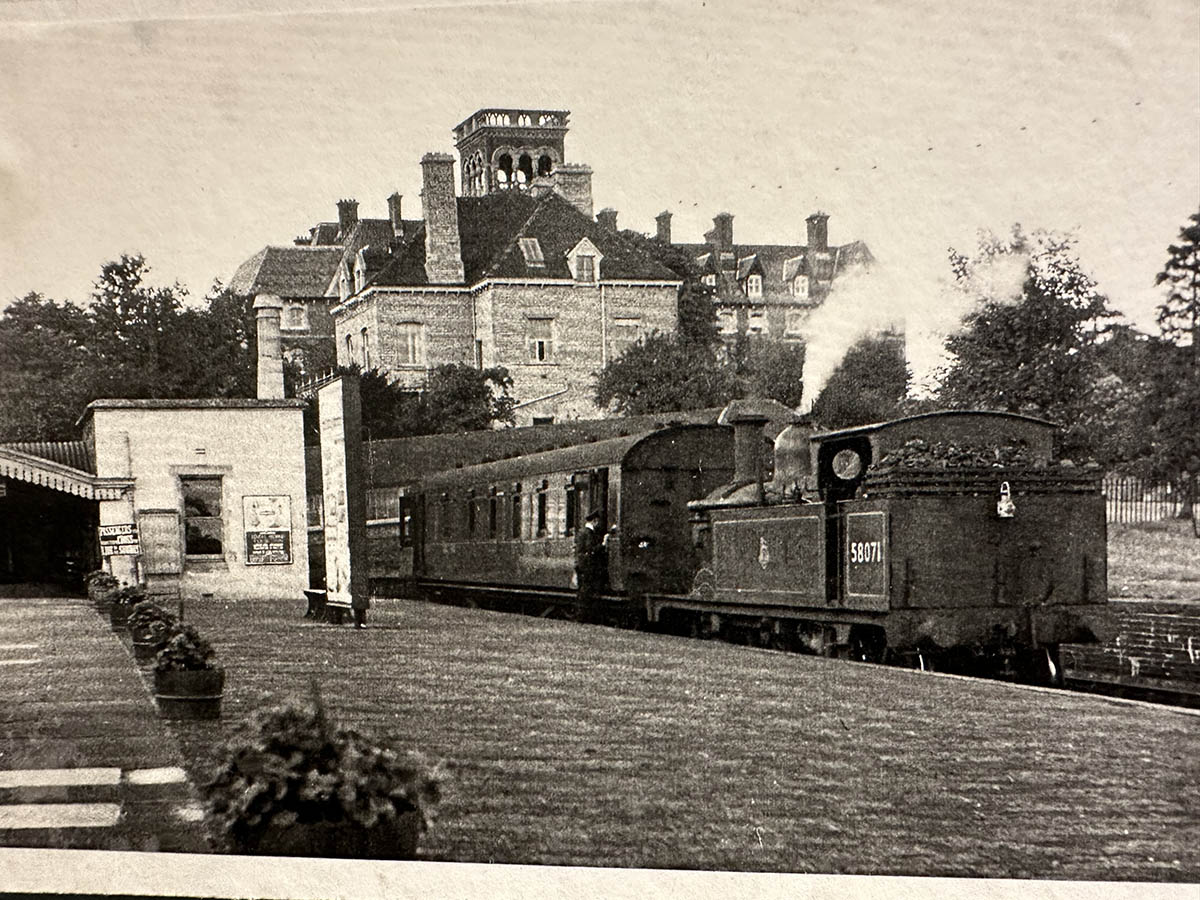
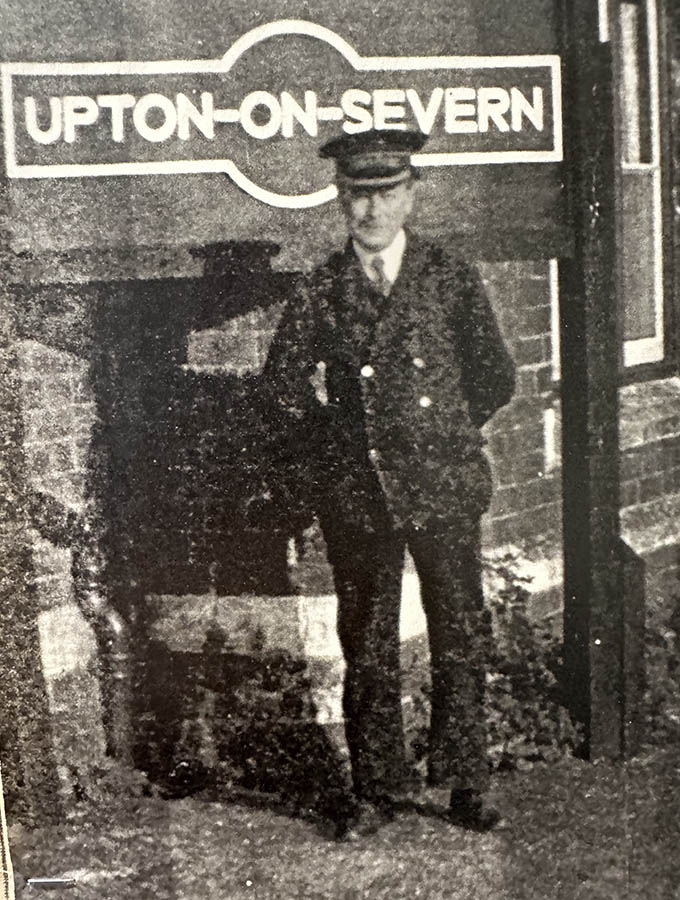
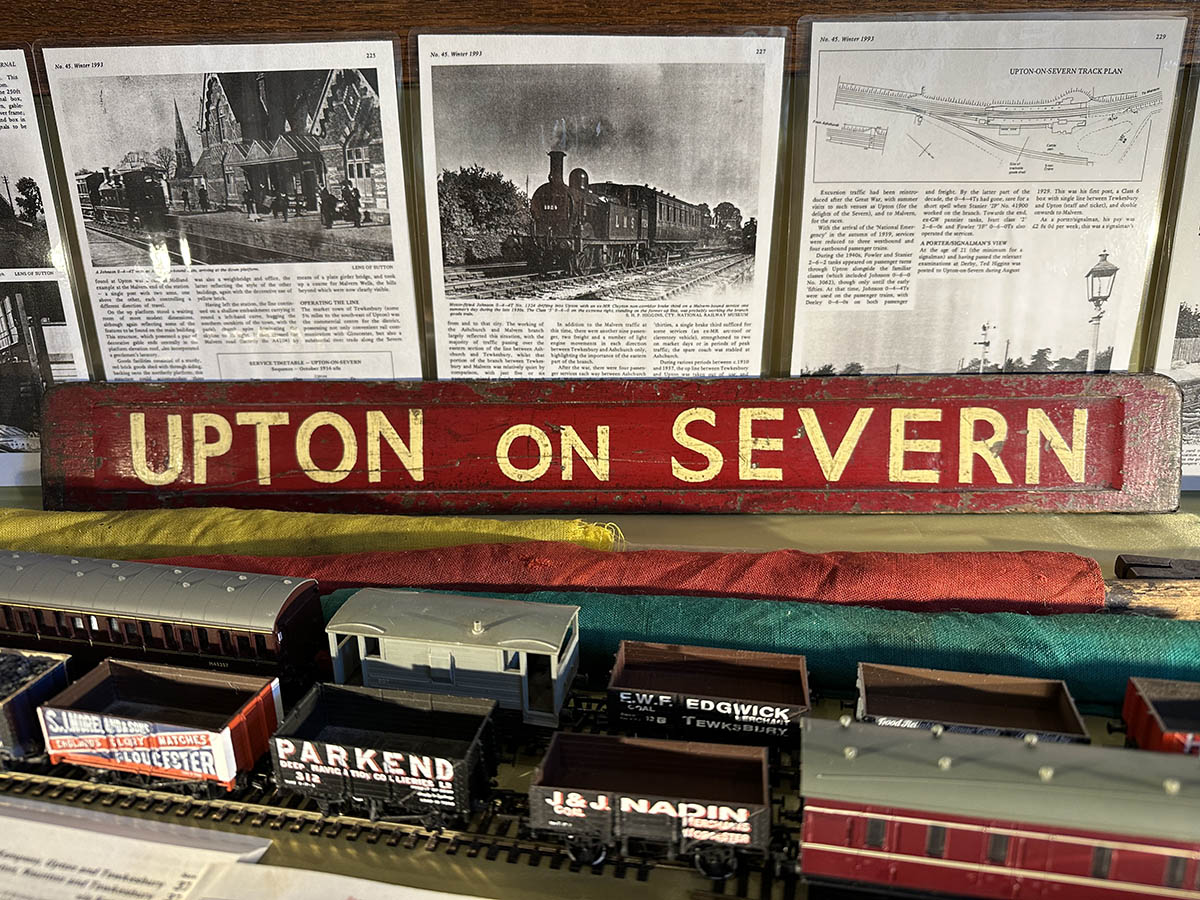
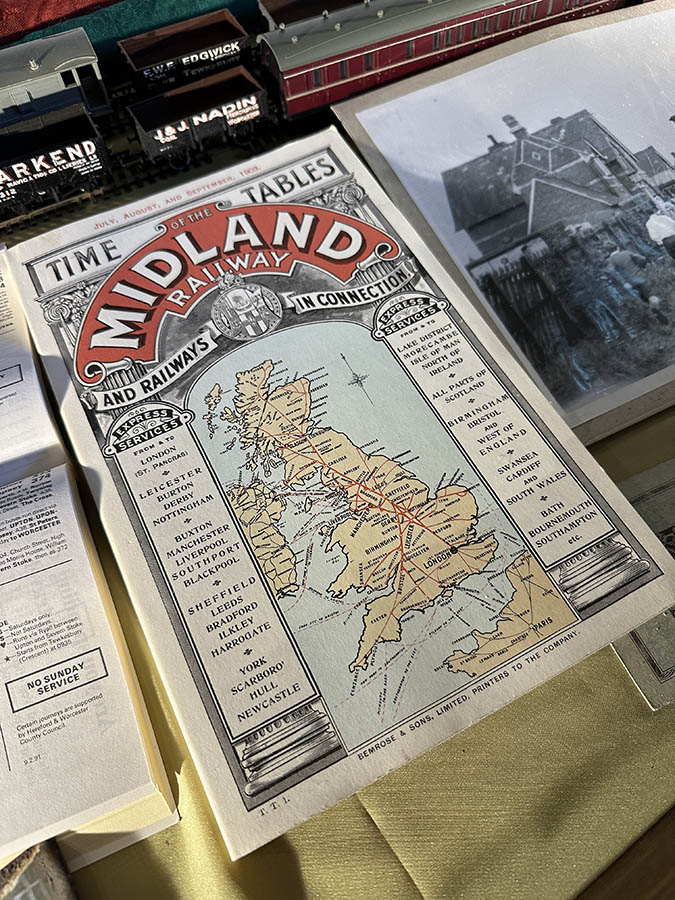
Upton railway station, as it was originally known, was opened on 16th May, 1864, by Midland Railway’s Tewkesbury and Malvern Railway which connected Ashchurch to Great Malvern. In 1923, as part of the grouping act, it became part of London Midland and Scotland Railway (LMS) and then in 1948, part of British Railways. Not long after in 1951, Upton became a terminus as the service to Great Malvern was withdrawn. In 1961, Upton was closed to passengers completely and in 1963, it was closed to freight as well. The station was located on the Southern side of Upton behind where the new fire station is now with the track to Malvern going across where the rugby pitches are now and the track to Tewkesbury, via Ripple, running parallel to Rectory Road where it swept around and crossed the river at Saxonlode. The section of the track bed from the rugby pitches to Cut Throat Lane is now a public footpath.